Review: Zanden Audio Systems Integrated Tube Amplifier -Japanese Origami Art withSamurai Mastery
This article is the complete English translation of the Zanden 6000F review written by reviewer Werner Ero for Music Emotion Magazine in May 2026 and published online at FWD.nl
Over the course of a review year, a considerable number of products usually pass through the listening room. Some are beautiful and intriguing, others simply ordinary, and sometimes less interesting. Naturally, the most enjoyable review products are those you personally feel connected to, and for me that absolutely includes the products of the legendary Japanese boutique brand Zanden Audio. Because if anyone deserves my respect, it is the exceptionally gifted designer Kazutoshi Yamada. A master of capturing the incredibly elusive essence of musical realism and a true artist when it comes to making his electronics sonically “invisible.”
Considering that I have personally used his Model 6000 integrated tube amplifier as my reference since 2015, it should be obvious that testing its literal successor could well become one of the highlights of the year. Does this newcomer once again live up to its intended superstar status, or does it remain merely beautiful and different?
A Critical Tension
Normally I would begin the review immediately at this point, but this time the context deserves a brief explanation. As mentioned earlier, I have used the aforementioned tube amplifier as my reference since 2015. It is both a wonderful music machine that inspires me daily and a fixed anchor point in my evaluations. Precisely for that reason, the announcement of its successor was followed by some with above-average interest.
In a small, specialized high-end landscape, something like this can sometimes provoke more than mere technical curiosity. In this case, it led to unrest and unusual discussions within the familiar audio channels and media environment. I place great value on journalistic independence and always try to judge products on their own merits.
This is no different here. The fact that external noise may occasionally resonate in the background changes nothing about the intention of this review: to provide the purest and most honest possible representation of my listening experience.
Whether this review is read as excessive praise or as critical analysis is entirely up to the reader. My role remains unchanged: to describe what a product is capable of, not what is commercially expected of me.
The Introduction
Back now to the subject of this review: the Zanden Audio 6000F. An adventure that actually began quite some time ago. Its origins were indirect, during the review of the Belgian-made Ilumnia Magister loudspeakers. A unique loudspeaker brand distributed in the Netherlands at the time by importer F&F HiFi, represented by Frank Essink.
The 6000 turned out to be an exceptionally beautiful match with these partially omnidirectional speakers, and that established the connection. Even after a long time, Frank could not get the remarkable end result out of his mind, and eventually asked me for the contact details of the Japanese company. I also told him that designer Kazutoshi had already been forced years earlier to discontinue production of the 6000 due to the cessation of manufacturing by the legendary transformer manufacturer Tamura.
Naturally, this was a tremendous shame, because especially in Europe we have come to appreciate “downscaling” — by which I mean simplifying the high-end audio system from separate pre- and power amplifiers to an integrated model.
Frank, who previously worked in Philips’ marketing department, gathered his courage, approached Yamada about the matter, and the rest is history.

The Excitement Builds
What makes the Zanden Audio brand so special is the mindset, talent, and execution with which Kazutoshi approaches the subject matter. Particularly fascinating is the way he repeatedly succeeds in integrating the legendary Zanden characteristics so precisely into each new design.
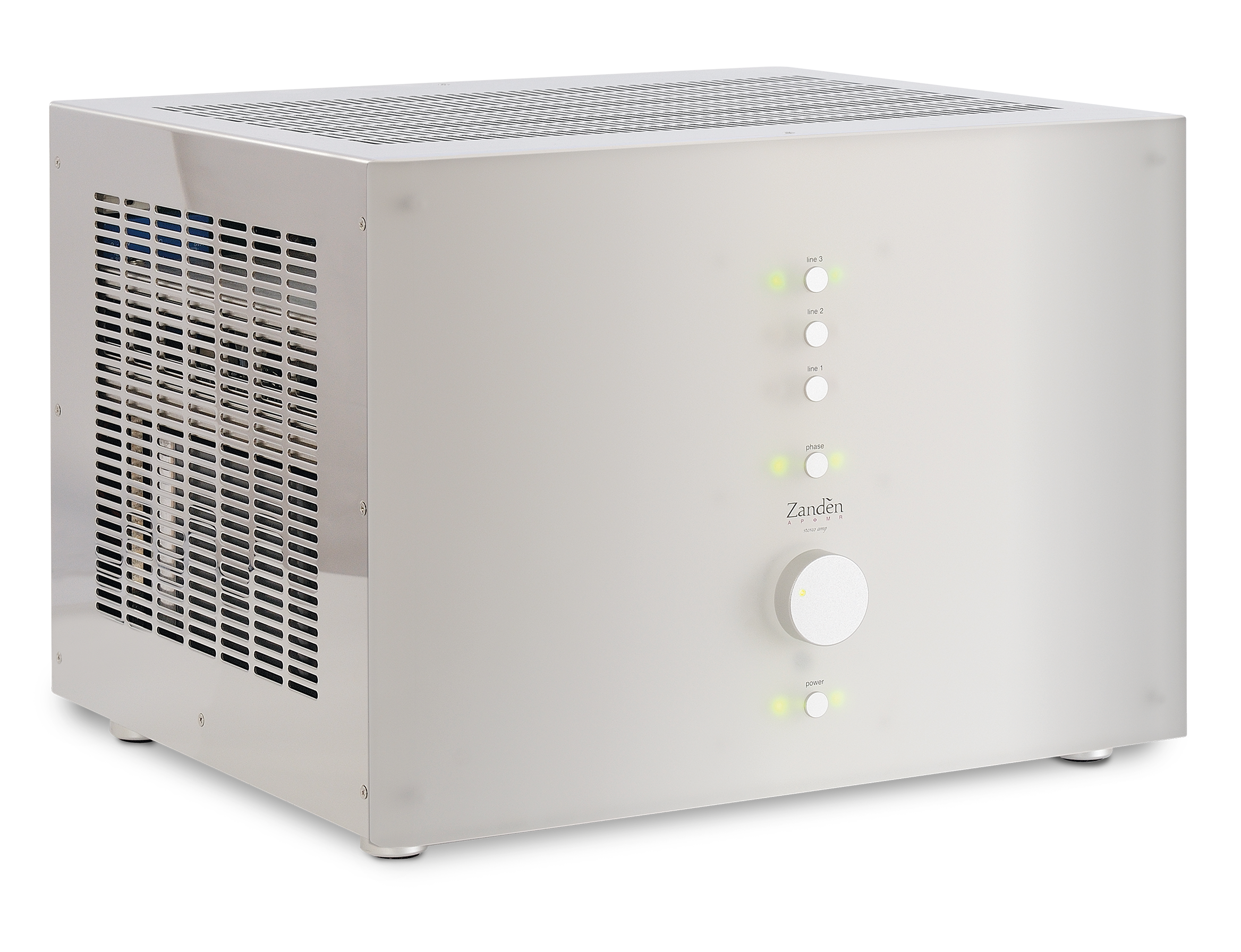
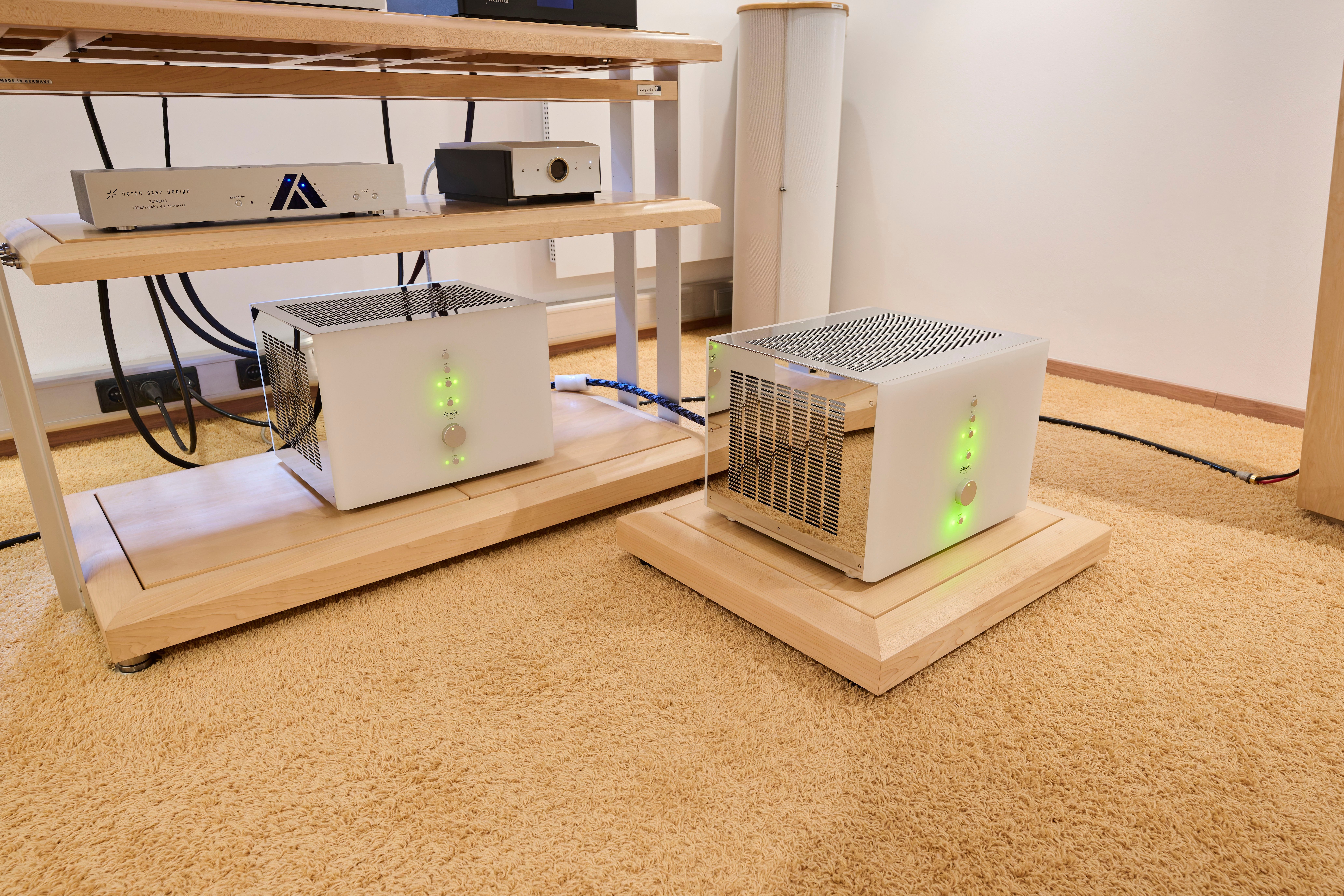
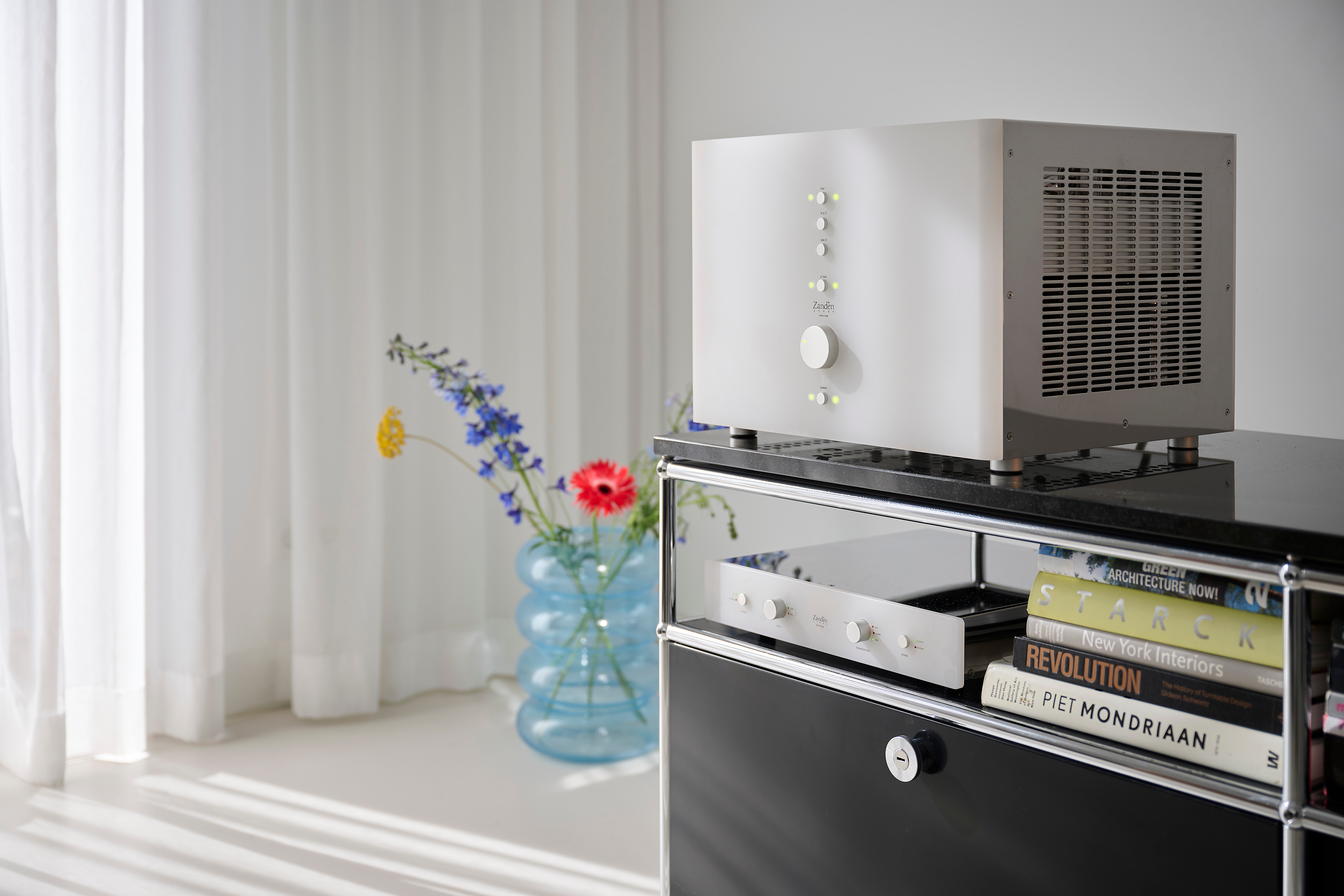
The moment the 6000F was carefully placed on my Finite Elemente Pagode Master Reference platform, the roots of the original 6000 were immediately recognizable. The successor looks virtually identical to its predecessor — at least from the front.
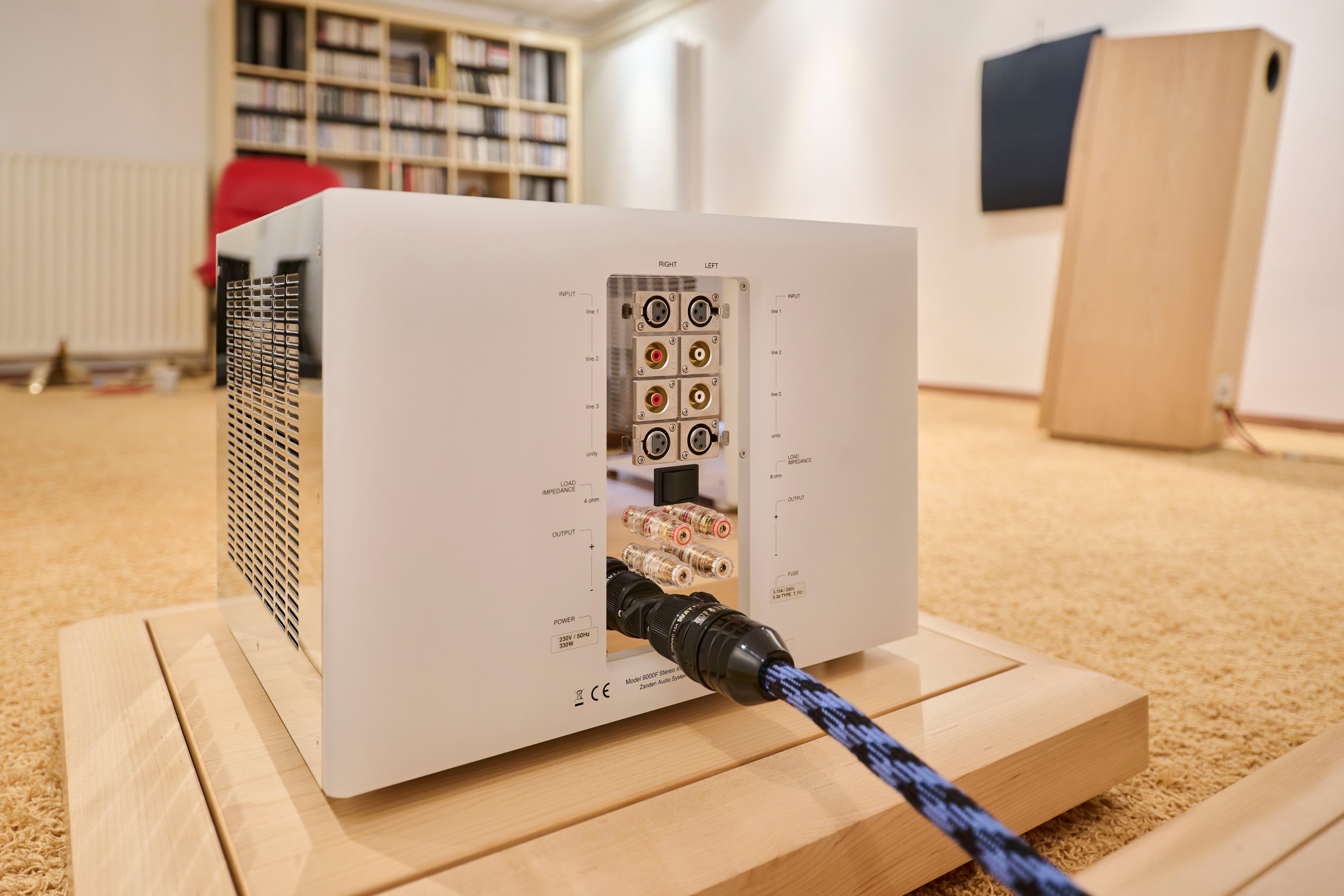
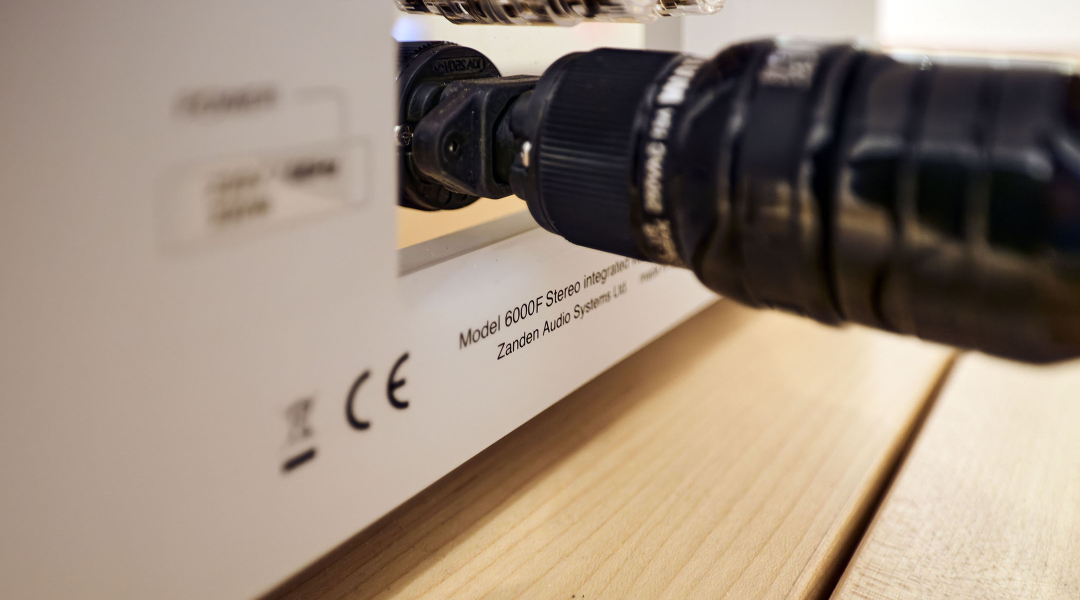
At the rear, however, the “F” reveals its differences. Most notably through the significantly larger cutout in the bead-blasted acrylic. This modification was made to allow the use of large spade connectors with the deeply recessed WBT Topline speaker terminals.
Yet after connecting and powering it on, I noticed even more differences. The relays sound different, and the LED in the volume control now flashes slowly during adjustment. On the 6000 it remained continuously illuminated. The motor also appears to have been tuned for faster operation, while fortunately the adjustment steps remain small enough to dial in the exact correct volume for each track.
That precise adjustability is often more important with a Zanden amplifier than with many others. Due to the perfect scaling of the musical presentation and the realistic contours, you very clearly notice that everything falls exactly into place at the correct volume level. This is a completely different approach from products where the music simply “plays” and demands less involvement from the listener.
Limiting Interference
Besides the now iconic stylistic characteristics of the Zanden Modern Line, with its distinctive cubist architecture, the appearance is defined by a beautiful visual tension. The matte surface of the bead-blasted acrylic front and rear panels contrasts strongly with the cover and chassis sections, which are made from high-quality polished stainless steel.
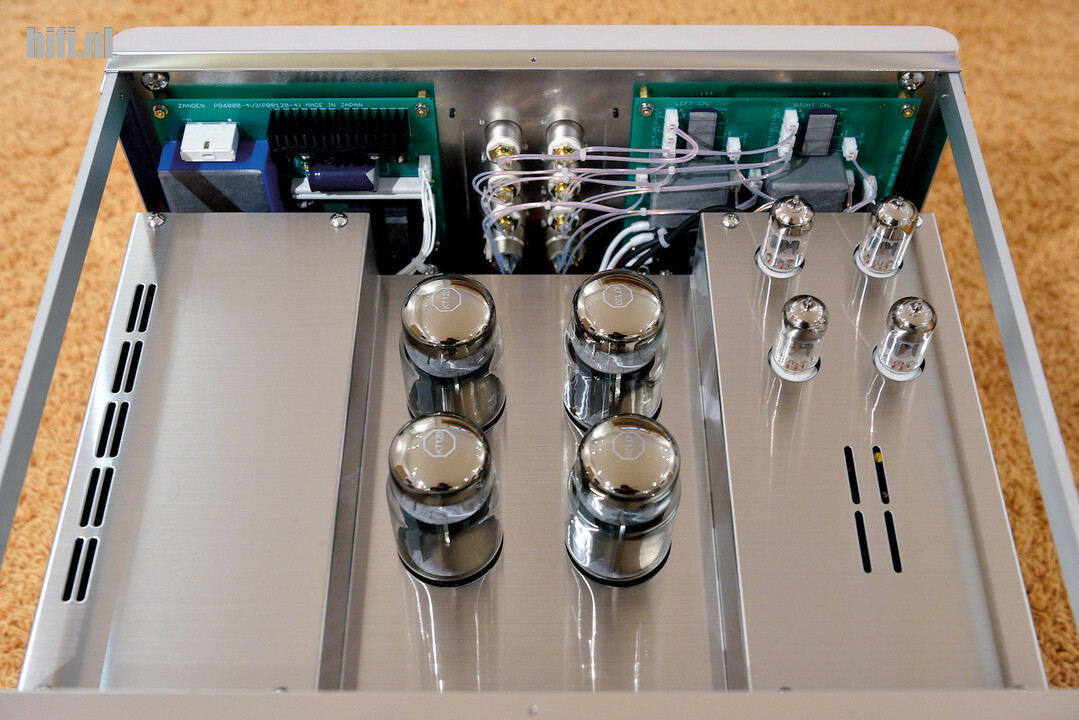
Remove the top cover — necessary for installing the tubes — and after removing the sixteen equally polished M1 Allen bolts, a beautifully brushed stainless steel heat shield appears.
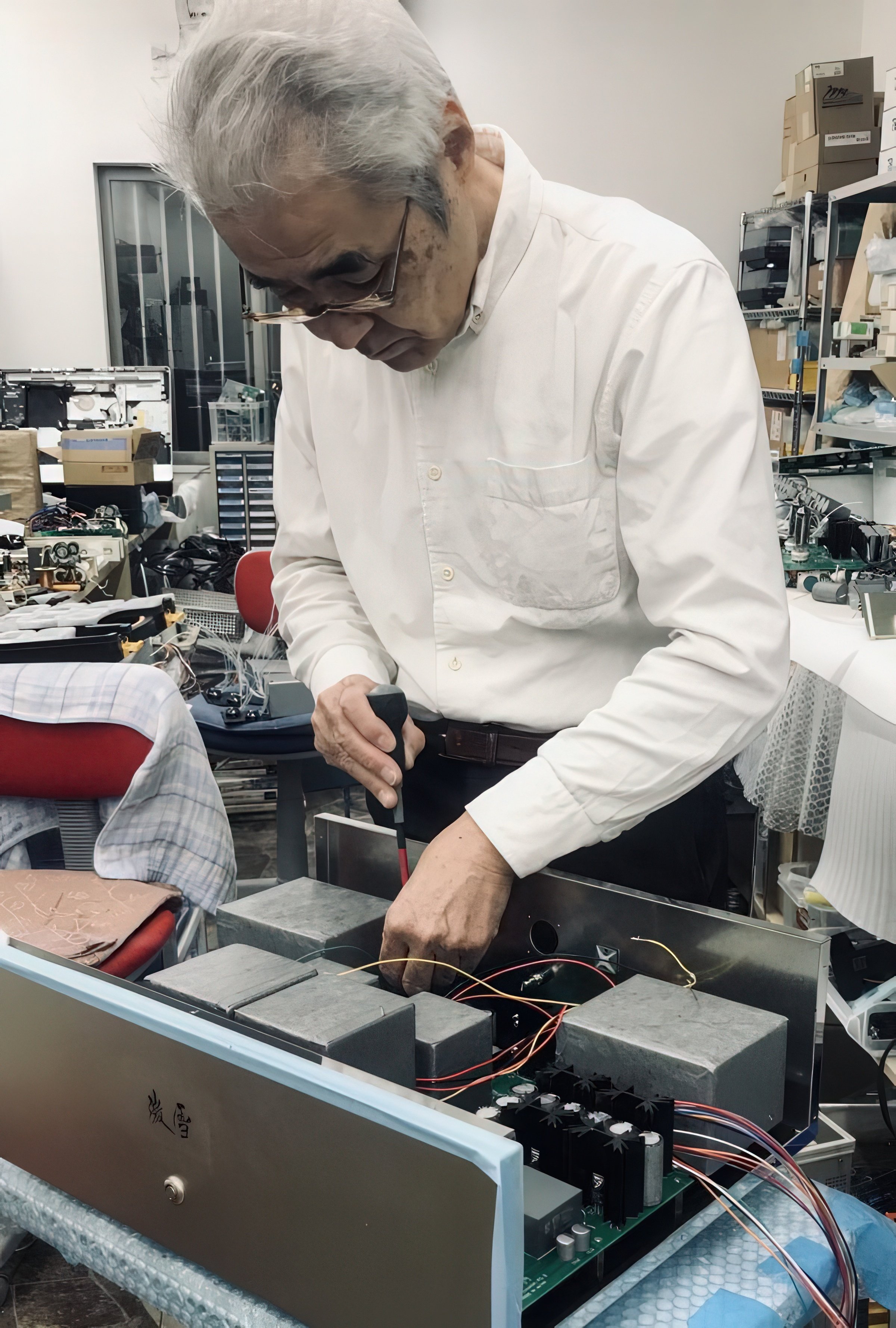
Because I specifically wanted to investigate the differences between the 6000F and the 6000, I removed this heat shield. What immediately stood out was that many components and the overall layout had been substantially changed. Although the basic circuit remains fundamentally identical to that of the 6000, the use of Finemet output transformers required the rest of the circuitry to be retuned accordingly.
Another important difference lies in the shielding. Yamada had the following to say about this:
“All electronic components such as transformers, wiring, and capacitors generate electromagnetic noise and static electricity noise that can negatively affect sound quality. In a tube circuit, where high impedances, high voltages, and intentionally minimal feedback are involved, these influences carry relatively greater weight. Whereas conventional shielding mainly focuses on blocking such disturbances, I choose a different approach. The goal is not to stop energy, but to dissipate it. With specially developed electromagnetic absorbers, this noise is converted into heat. This material was developed in cooperation with a specialized materials manufacturer and forms an integral part of the design philosophy.”
Finemet Output Transformers
One of the most important parameters distinguishing the Zanden 6000F from its predecessor is the use of its special and costly Finemet output transformers. This is a so-called nanocrystalline core material originally developed by Hitachi Metals.
It is characterized by extremely thin, densely packed laminations that provide exceptionally low core losses and outstanding magnetic properties. This material offers a wider frequency range with lower distortion than traditional silicon or oriented-core materials used in audio transformers, such as the previously used Tamuras.
Following the more expensive Classic line, Zanden consciously chose this material for the less extravagantly priced Modern series — of which the 6000F is a part — once the original Tamura output transformers were no longer available.
And they did not stop there, because according to designer Kazutoshi Yamada, the explicit goal was to achieve a genuine sonic improvement over the previous design. Production of the Finemet transformers is handled by specialized winding companies, in this case the Japanese manufacturer Tsuge Denki. A company uniquely capable of processing these delicate core materials into high-quality audio output transformers.
Due to the unique properties of Finemet — such as low hysteresis losses — these transformers are praised for their extreme transparency, speed, and absence of distortion compared to traditional iron or nickel cores (mu-metal).
Technically Better — But at a Price
Nevertheless, we must remain realistic, and it is only fair to mention that the Tamuras still possess their own package of positive qualities. While Finemet offers greater bandwidth, the Tamuras, built around oriented-core silicon steel, are in turn superior in current capacity, resistance to core saturation, and energy storage within the core.
In other words, they can process more energy simultaneously without collapsing than similarly sized Finemet output transformers. In practice, this results in greater macrodynamics, more low-frequency impact, natural tonal colors, and better drive when controlling difficult loudspeakers.
Furthermore, the Tamuras often saturate more gradually and “gracefully,” can temporarily buffer more energy, and provide a stronger sense of substance and weight in the music.
Because the 6000F is once again a 100% tube amplifier, the unit — like its predecessor — uses four Tung-Sol KT120 output tubes configured in a Class A/B push-pull circuit. Four Electro Harmonix 12AU7 Gold tubes serve as driver tubes.
Together, the KT120s provide 2 × 90 watts per channel within a patented, unique, and clever circuit design. The directly coupled second and third amplification stages are a fine example of this. In fact, there is no coupling capacitor between these two stages.
Precisely the absence of such a capacitor contributes to the purity, phase coherence, and extraordinary micro-detailing that have established the brand’s worldwide reputation. But this does not come easily: the design is extremely critical and component tolerances must be much tighter — and therefore more important.
Returning once more to aesthetics, the bead-blasted remote control, styled identically to the amplifier itself, still operates with precision and certainty, featuring firm push-buttons with a clearly defined tactile response. Moreover, all functions visible on the front of the 6000 can also be controlled remotely.

High-Frequency Absorption Material
One of the factors that has distinguished Zanden — and therefore also the 6000 integrated amplifier — from much of the competition over the past decade is the use of a special absorption material that extensively suppresses EMI/RFI and high-frequency noise.
I am referring to the so-called Pulshut fibers from the Japanese manufacturer Asahi Kasei.
Whereas in the original 6000 nearly all components were wrapped in this mysterious-looking grayish fabric, the 6000F applies it in a more selective and targeted manner. Certain areas are intentionally damped less, while others receive additional treatment.
The hard caps placed over specific components silently testify to this approach and, according to Kazutoshi, function as so-called electromagnetic wave absorbers.
This forms a further extension of the Pulshut material and is entirely consistent with Zanden’s philosophy of controlling and minimizing interference as effectively as possible.
When we examine the 6000F, we once again see — just as with all other Zanden products — that extreme attention to every detail. Take only the optimally oriented components such as capacitors inside the amplifier and the stainless steel “cage” surrounding the electronics. Partly because of its shielding properties, this contributes to the enormous sense of calm, the remarkably low noise floor, and the extraordinarily high resolution. Qualities that are further enhanced by the Finemet output transformers.
Incidentally, you can easily test whether your own tube amplifier has effective shielding. Bring your mobile phone close to your equipment and call it. Before the connection is established, you will normally hear a repetitive electronic signal through your loudspeakers. With a Zanden tube amplifier, everything remains silent. And you can probably imagine that there are many more signals in and around your home attempting to attack your tubes and subtly — or less subtly — influence the sound.
Listening — The Prelude
No, this is not about specific sexual acts, but rather the path I had to travel from my existing 6000 to the new 6000F. Naturally, just as I was during those first listening sessions, you are probably extremely curious about how all of this manifests itself sonically.
Like every component under review, the 6000F spent a long period operating in countless different configurations. The list is so extensive that I intentionally will not mention it here. But one thing became immediately clear: the F is a completely different “animal” from its predecessor. Not only different in terms of sound and interpretation, but also intended for a different type of listener.
The very first thing I did was completely disconnect my 6000. When you live with a product for so long, you become partially fused with its characteristics. That made this separation necessary, and during the months that followed I listened exclusively through the 6000F.
The first thing that remained with me is what I call “Zanden integrity”: the coherence between all sonic characteristics as one holistic whole. A quality that essentially defines every product Kazutoshi has created throughout his career. The man simply possesses an enormous amount of practical live-listening experience, an extremely sensitive ear for timbre, distortion, energy, and time- and phase-related behavior — and, most importantly, he knows how to translate all of this into technical decisions and measurable values.

Listening 1 — Enjoying Purity, Calm, and Silence
After switching over, the difference was so substantial that I needed some time to adjust. The familiar power, slam, and drive of the 6000 had evolved into less tonal saturation, even greater transparency, remarkably broad bandwidth — especially audible in the treble — tighter yet somewhat less forceful bass, and a more forward positioning of voices and instruments within the stereo image.
The purity is extraordinarily high, while the listening volume could subjectively be set lower while still remaining satisfying and engaging. Where the 6000 sounds pure and clean without drawing attention to that fact, the F makes you much more consciously aware of its cleanliness. At the same time, it remains a true Zanden in the sense that all sonic parameters come together as a holistic whole.
Because of this different character, I also began listening to different music: smaller jazz and classical ensembles, more singer-songwriter material, and fewer large-scale works. That certainly does not mean larger works cannot be played. Rather, the character of the amplifier naturally encourages recordings with a high degree of refinement.
During long listening sessions, new insights regularly emerged. A wonderful example is the music of British singer Norma Winstone on the ECM label. When she performs songs such as the intimate Just Sometimes from Stories Yet to Tell or It Might Be You from Dance Without Answer, the interaction with pianist Glauco Venier and bass clarinetist Klaus Gesing becomes breathtakingly beautiful.
Everything is presented in a completely natural way and possesses that unmistakable Zanden realism.
In later comparisons with the 6000, the older model projects the whole performance deeper into the space and allows the room itself to breathe differently, while the F favors the direct sound of voices and instruments and provides greater saturation and natural warmth. Ultimately, however, much also comes down to personal taste and system matching.
Listening 2 — In Line with the Zanden Classic Series
After even longer listening, the differences become increasingly clear and pronounced. The “F” reveals itself as an artist of the pure and refined arts. A design that successfully combines the virtues of the purest-sounding transistor amplifiers with the beauty and emotional involvement of tubes.
If you love tube sound but sometimes miss definition and tightness in the bass, find the midrange a little too woolly, and the treble beautiful yet slightly too rounded, then this could very well be your type of tube amplifier. And then I have almost forgotten the magnificently layered 3D soundstage.
A characteristic already typical of tubes, but elevated by Zanden to previously unimaginable heights.
To explore this, I often use the wonderful music of Norwegian percussionist Terje Isungset. With his background in jazz and traditional Scandinavian music, he has become a true authority in the use of innovative percussion instruments.
Above all, however, he is known as the inventor and pioneer of Ice Music — music played on instruments he designed himself from natural materials such as ice, arctic birch, granite, slate, and sheep bells.
Just like the 6000 — powerful, grand, and exciting — the 6000F astonishes in its own way through the extreme separation of complex sonic blocks, the long decays, and its ability to follow exactly how instruments are played. The meditative relaxation is immense and you can completely disappear into this beautiful and atmospheric music.
It is also important to realize that, due to its soft, extremely pure, and refined character, the F aligns more closely with the more expensive Zanden Classic series than with the more outspoken and “wild” 6000. Thus, it is calmer, more focused on purity and refinement, softer timbres, and the quiet, intense enjoyment of small musical nuances.
It is absolutely beautiful and addictive — a sonic direction that perfectly matches what modern listeners increasingly expect from their systems. In short, this is a presentation in which the music integrates smoothly and naturally into daily life rather than aggressively demanding attention.

Universal Applicability
In this final section before the conclusion, I would like to briefly discuss usability. Because despite what some manufacturers may claim, it remains a fact that tube amplifiers are generally less capable of driving difficult loudspeakers with low impedance values than their transistor counterparts.
Of course, manufacturers can resort to “tricks” such as more feedback and even larger power supplies with additional tubes. But in doing so, you partly lose the very reason why you wanted a tube amplifier in the first place. As always, Zanden chooses the purest and cleanest possible route. A type of reproduction that more than almost anything else opens the door toward genuine sonic realism.
Returning to the 6000F itself, the question becomes whether the amplifier can easily be integrated into an existing system and whether there are any specific considerations that require attention. As you could already read at the beginning of this review, there is a clear difference in output transformer material. Finemet possesses a lower core load capacity, and I could clearly hear this reflected in my findings.
For example, I can drive the Ilumnia Magister perfectly with the older 6000, whereas this works noticeably less convincingly with the 6000F. That certainly does not mean the newcomer fails in this respect. Many loudspeakers used during the review period — such as the reference Master Contemporary C, Dali Epikore 7, and Boenicke W8 SE — performed excellently.
Another aspect to keep in mind is the extremely high resolution of this latest Zanden amplifier. What you notice is that although the amplifier itself already sounds musical, fluid, and coherent, it immediately reveals when the system matching — cables, sources, or loudspeakers — is not yet entirely correct.
You are certainly not punished for this, and the reproduction remains relaxed and musical regardless. But the moment everything does click into place, you immediately notice that every element suddenly locks into position, and you realize that this 6000F is once again a true Zanden.
Conclusion
What an extraordinary amplifier, what a pleasant surprise, and what a completely different presentation and perspective compared to its predecessor.
What I find especially impressive is the way designer Kazutoshi Yamada managed to transform the disadvantage of the discontinued Tamura output transformers into an advantage. Naturally, he was greatly assisted by the experience he had previously gained with the Classic series. Yet even so, it is remarkable that the new design still shares certain core traits with its legendary predecessor, the 6000.
Although there remain aspects in which the 6000 still prevails, it must also be said that the F surpasses it in several specific areas.
Another strong point — and one of the reasons I fell in love with the 6000 ten years ago — is the advantage of its built-in passive volume control compared to active alternatives. Normally, a separate passive volume control provides purity and transparency but often at the expense of sounding somewhat thin and dynamically restrained. Because the control in the 6000(F) is fully integrated into the overall concept, however, everything has been optimized around it and the internal wiring kept ultra-short.
I would like to conclude by stating that the 6000F faces very little true competition. Particularly because of the Finemet output transformers combined with the passive Alps volume potentiometer, a beautiful sense of speed, purity, and transparency has emerged.
A presentation contained within a single chassis that comes remarkably close to the current limits of what is achievable in tube amplification. And in typical Zanden fashion, it delivers a dream combination of musicality and maximum insight into the recording.
Allow yourself to be challenged and discover an amplifier that illuminates your music from its very core. As challenging as Japanese origami and with a mastery and underlying power that perfectly align with the philosophy of the ninja warrior.
Impressive.
For a personal demonstration of the Zanden 6000F, as well as other Zanden Audio components, please contact the official Zanden Audio importer: Frank Essink of F&F HiFi – [email protected]